Arch, QEMU, and Virt-Manager
sudo pacman -Syu
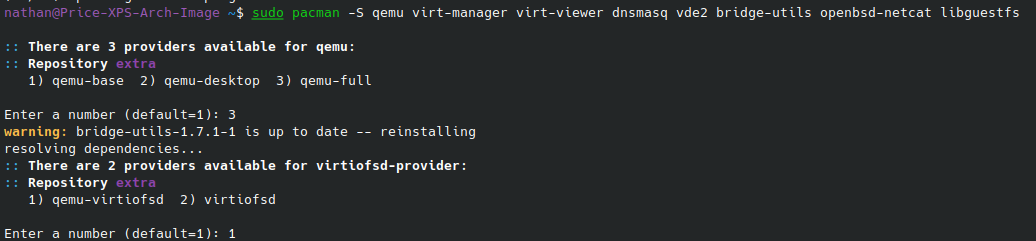
sudo pacman -S qemu virt-manager virt-viewer dnsmasq vde2 bridge-utils openbsd-netcat libguestfs
I chose these providers for qemu and virtiofsd
yay virt-bootstrap
sudo systemctl enable libvirtd
sudo systemctl start libvirtd
sudo nano /etc/libvirt/libvirtd.conf
unix_sock_group = "libvirt"
unix_sock_rw_perms = "0770"
sudo usermod -a -G libvirt user && newgrp libvirt
sudo nano /etc/libvirt/qemu.conf
user = "nathan"
group = "nathan"
Add VM
Open virt-manager
File > Add Connection

Might need to manually choose the OS when selecting the ISO.
Move the VM
Find the disk location

create a new location
sudo /mnt/Storage/QEMU && sudo chown nathan:nathan /mnt/Storage/QEMU
mv /home/nathan/.local/share/libvirt/images/win10.qcow2 win10.qcow2
Edit the xml to reflect the new path

Settings
I've found that using VGA graphics and Spice Server with Opengl enabled has given me the best performance.
Comments
Join the discussionNo comments yet. Be the first to comment.